Silas Aylmer Ruthyn
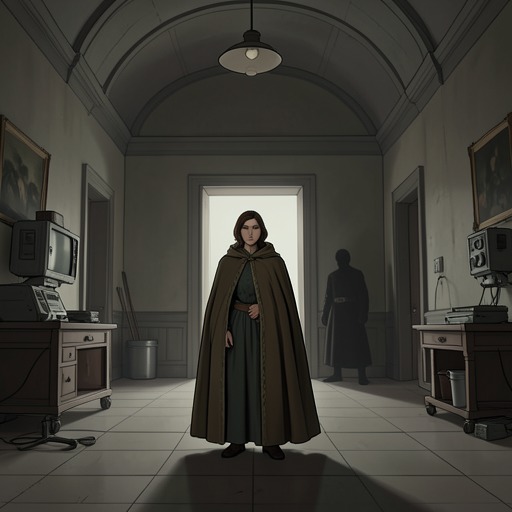
Uncle SilasSilas Aylmer Ruthyn is the younger brother of Austin Ruthyn and the uncle appointed to govern Maud Ruthyn’s life until she reaches twenty-one. The will casts him as both a disgraced man whose name his brother hopes to clear and a guardian whose financial interest is inseparable from Maud’s survival. His portrait and family history make him an object of fascination before he appears in person; the legal arrangement then turns that fascination into a perilous test of trust.
Identity and Background
A portrait first gives Silas a strikingly divided presence: handsome and delicate in feature, yet marked by a forceful expression, resolute ability, and fire in his large, shadowed eyes. Its luxurious setting includes an Italian greyhound, slender columns, and rich drapery. The inscription identifies the child in another picture as Silas Aylmer Ruthyn, aged eight, on 15 May 1779. The image becomes a point of departure for Maud’s effort to reconcile the pensive boy with the adult family stories attached to his name.
Austin describes Silas to Maud as a man of great talents, great faults, and great wrongs. He says Silas’s faults were long since repented of, while his brother feels the wrongs more keenly than Silas himself. Austin also warns Maud not to dwell on him yet, promising that she may one day know him well and understand how villains injured him. The language establishes Austin’s protective, partisan account before Maud has any direct knowledge of her uncle.
Family History and Reputation
The family account places Silas as the younger son, with little more than a thousand pounds a year. According to the recollection Maud hears, he lost heavily at play, and Austin paid large sums for him over a long period. He was remembered as expensive and vicious in his youth, though the story also suggests that he would have changed his past if he could. Maud, looking from the portrait of the eight-year-old boy to the disgraced, suffering older man described to her, reflects on how little beginnings may grow into either good or evil.
Silas’s marriage intensified the breach between the brothers. Austin had helped him, but never forgave him for marrying a woman surrounded by unpleasant reports and not received socially. The estrangement lasted for a time, then was repaired on an occasion that some people thought should have made the division permanent. The account leaves the precise history of that reconciliation and the allegations against Silas unresolved, preserving the tension between family loyalty and public suspicion.
The Will and Guardianship
Austin’s will places his property in the hands of four trustees: Lord Ilbury, Mr. Penrose Creswell, Sir William Aylmer, and Hans Emmanuel Bryerly. The estate is held in trust for Maud, while Silas is left £15,000 and each of his two children £3,500. He is also granted use of Bartram-Haugh and adjoining lands for life at a rent of five shillings a year, under conditions concerning waste. These provisions give him a home and substantial support without making him the outright owner of Maud’s inheritance.
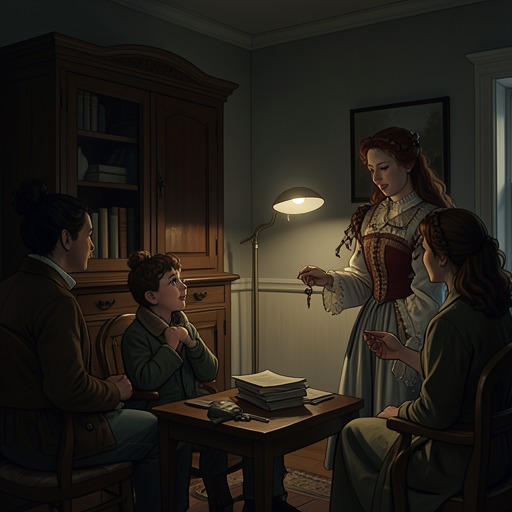
A separate clause gives Silas sole guardianship of Maud, with full parental authority until she is twenty-one. She is required to live under his care at Bartram-Haugh, and the trustees must pay him £2,000 yearly for her maintenance, education, and expenses. Maud initially sees the move as a painful loss of home mixed with the promise of a new country, a new household, and companionship with her cousin Millicent. The arrangement therefore appears at once as a personal upheaval and as a legal transfer of day-to-day authority over her.
The will’s condition creates a sharper danger than Maud first understands: if she dies before reaching twenty-one, the entire property passes to Silas. Doctor Bryerly calls the trust extraordinary and objects to the combination of Silas’s control over Maud’s person with the financial consequence of her death. The trustees’ legal ownership, Silas’s powers as guardian, and Maud’s position as beneficiary do not amount to the same kind of control; the clauses nevertheless bind her welfare to the interests of the man charged with protecting her.
Vindication and Conflict
Austin’s private letters to the trustees explain that he chose Silas as guardian to demonstrate his confidence in his brother and, if possible, silence the slander that had dishonoured the family. He describes Silas as oppressed and unhappy, and the guardianship as an ordeal of purification: if Maud dies under age, all Austin possesses will go to Silas; meanwhile Austin commits her person to him alone, believing her as safe with her uncle as she would have been under his own care. The will is thus not merely an inheritance instrument. Austin deliberately makes Maud’s guardianship a public and familial vindication of Silas.
Reading the letters, Maud is shaken by the thought that her own earlier hesitation may have frustrated her father’s purpose and broken faith with the dead. The documents deepen the moral pressure of the appointment: rejecting Silas risks seeming to reject Austin’s final declaration of trust, while accepting the arrangement places Maud within the authority Austin meant to affirm. The family’s attempt to settle Silas’s reputation consequently makes Maud’s safety part of the proof.
That trust later collides with Doctor Bryerly’s challenge to Silas’s handling of the estate. Bryerly says that, whether by mistake or otherwise, Silas is exercising a power he does not lawfully possess, impoverishing the estate and thereby wronging Maud to the extent that he benefits. Silas responds that he is being accused of technical fraud and insists that he is a very different man from the one he once was; he recalls that in his former life he might have tried to knock Bryerly down for less. The exchange sets his professed reformation against a concrete dispute over authority and property, without resolving the accusation in this episode.